
Why professional web
development is
critical for business
growth ?
A website is no longer just a digital brochure.
It is a company’s primary digital platform, responsible for performance, security, scalability, and trust.
Behind every fast, stable, and reliable website lies professional web development: not just code, but architecture, engineering standards, and long-term planning.
“Your website is your most valuable digital asset.”
1.Web development is the foundation of digital performance
Design defines appearance, but development defines performance.
Professional web development ensures:
- Fast loading times
- Stable functionality
- Efficient data handling
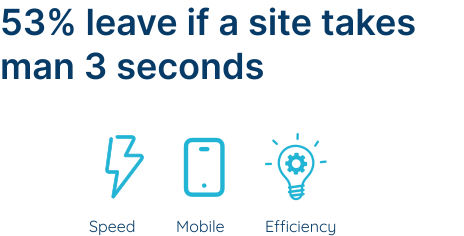
53% of users abandon a website if it takes more than 3 seconds to load.
Speed is not a feature.
It’s a requirement.

2.Performance directly impacts SEO and visibility
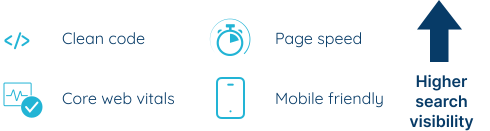
Search engines reward websites that are :
- Fast
- Mobile-friendly
- Technically optimized
Professional development improves :
- Core Web Vitals
- Clean, semantic HTML
- Efficient JavaScript execution
Google officially confirmed that page speed is a ranking factor for both mobile and desktop searches.
If your website is slow, your visibility suffers.
3.Security is a core responsibility
Modern websites manage :
- User data
- Authentication
- Payments
- Integrations
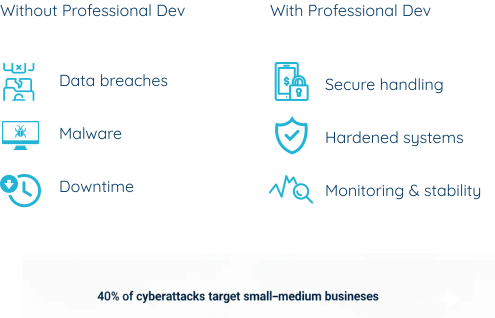
Poor development practices expose sites to :
- Data breaches
- Malware
- Downtime
More than 40% of cyberattacks target small to medium-sized websites.
Security is invisible , until it fails.
4.Scalability enables business growth
Many websites fail not because they are poorly designed, but because they cannot scale.
Professional web development allows :
- Adding features without breaking the system
- Handling traffic spikes
- Supporting business expansion
A scalable website grows with your business, not against it.
5.Code quality reduces long-term costs
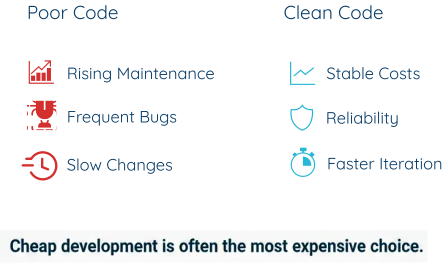
Poor code leads to :
- High maintenance costs
- Frequent bugs
- Slow development cycles
Clean architecture and best practices :
- Reduce technical debt
- Improve reliability
- Lower long-term expenses
Well-structured codebases significantly reduce maintenance and redevelopment costs.
Cheap development is often the most expensive choice.
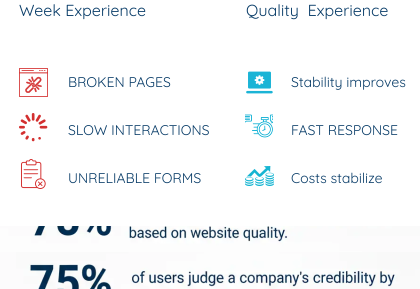
6.Web development shapes user trust
Users may not see the code, but they experience its quality through :
- Broken pages
- Slow interactions
- Unreliable forms
75% of users judge a company’s credibility based on website quality.
Trust is built through reliability.
7.Applied case insight: Development & business results
Applied studies on optimized websites show :
- Reduced bounce rates
- Higher engagement
- Improved conversion rates
Technology that works smoothly becomes invisible, and that’s a sign of excellence.


8.When does a business need professional web development?
Professional development becomes essential when :
- Traffic increases
- New features are required.
- Security risks grow
- Performance limitations appear
If your website can’t keep up, neither can your business.
Conclusion
Professional web development is not about writing code, it is about building reliable digital infrastructure.
A successful website :
- Loads fast
- Scales efficiently
- Protects users
- Supports long-term growth
Great websites are built, not improvised.
Is your website truly supporting your business growth or holding it back?
Professional web development is not about looks alone.
It’s about performance, security, scalability, and long-term reliability.
Let our team build a website that grows with your business.
Talk to our web development experts today
References
- Steve Souders — High Performance Web Sites
- Ilya Grigorik — High Performance Browser Networking
- Martin Fowler — Patterns of Enterprise Application Architecture
- Robert C. Martin — Clean Code